Showing posts with label Greenspace. Show all posts

Wednesday, April 21, 2010

Secret Gardeners

One of the best-kept secrets in Baltimore are the seven small, city-owned, citizen operated urban farms scattered throughout the city. And to think I've been trying to grow veggies in my shady postage-stamp yard this whole time!
The farms appear to be a resource that I think many city-dwellers would like to take advantage of, but of which few may be aware.


Locations of all 7 City farms. Larger Map. Let me know if the druid hill location is inaccurate.

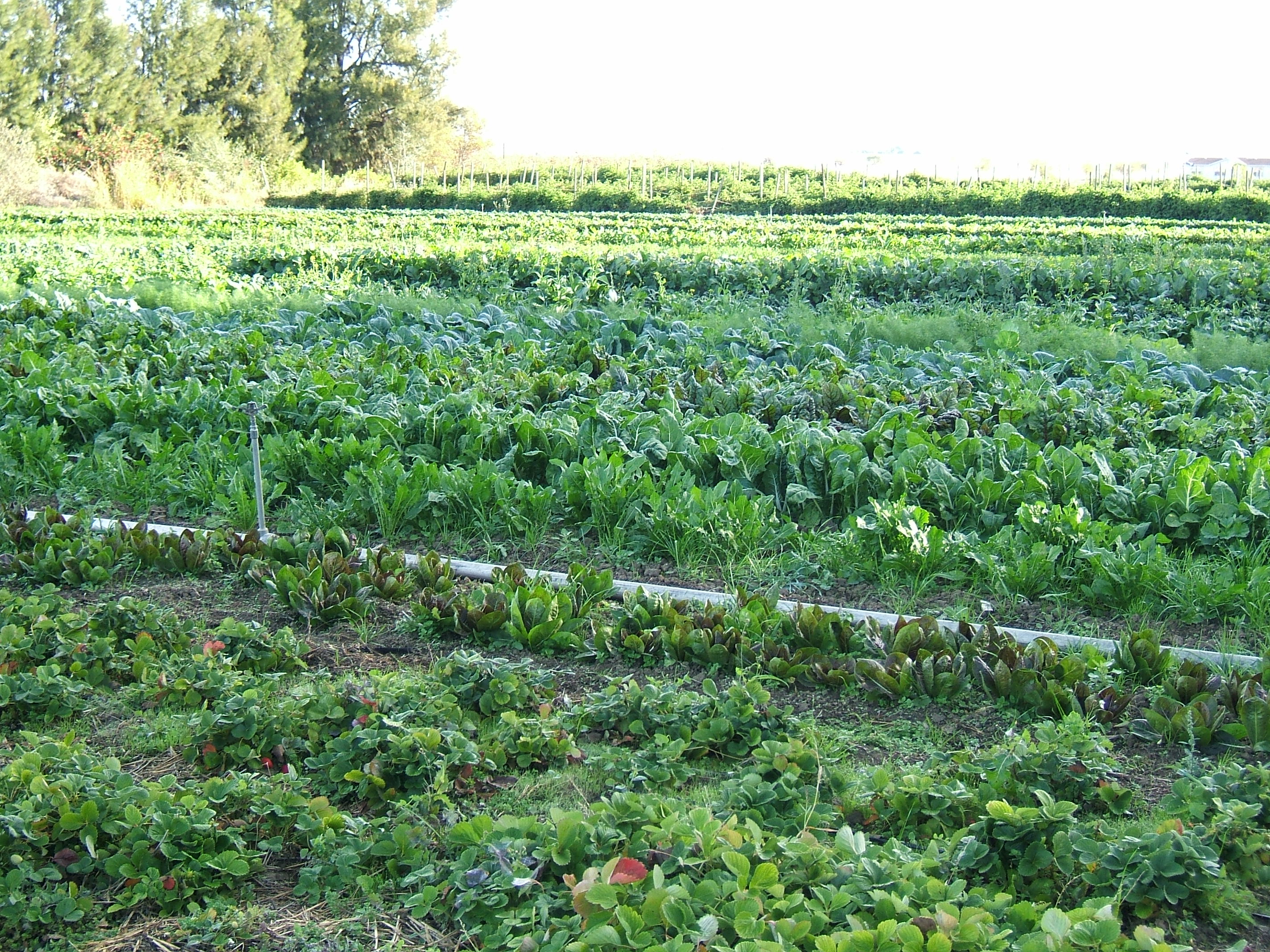
The mystery began to unravel when I discovered a mysterious farm plot tucked inside a chainlink fence as I was walking in Roosevelt Park, in Hampden. Luckily for me, a local farmer had left the gate ajar while he was gardening and upon my questioning revealed that I (or anyone in the city) could rent a small plot for a modest yearly fee!

This site answers some questions and has contact information for interested parties.
Some small details are not up to date, however.
Here's a selection from the 2010 farm plot application:
(which you can request by email from the coordinator by following the link above.)

1.To qualify for participation in the program, you must be at least 18 years of age and a resident or employee of Baltimore City. An adult must sponsor anyone under 18.

2. New gardeners are permitted to rent only one plot in their first year. Gardeners will be considered for additional plots in subsequent years at the discretion of the coordinator. Each household has a three-plot maximum.

3. Plots are @ 10’ x 15’ and are marked by a numbered stake. Make sure the stake number matches the number on your contract and receipt.

4. Rental cost for 2010 is $30.00 per plot; there is a one time non-refundable key fee of $10.00 for new participants. Prices are subject to change through written notice. Do not make copies of your garden key – extra keys can be obtained through the City Farms office.

5. Gardening hours are dawn to dusk. For your personal safety and to prevent vandalism, make sure the gates are locked at all times.

6. Wood chips and leaf compost are provided by the Horticulture Division for use in the gardens. Water will be available from early spring through late fall.

7. At the City Farms, trash is separated into two categories – organic garden remains, and garbage. Organic debris consists of pulled weeds, spent plants or anything that once was growing in your garden. Organic debris is kept in a separate pile at designated areas in each City Farm. Garbage is trash that has not grown in your garden, and goes in the trashcans provided. Do not put garbage in the organic waste piles, or bags of pulled weeds in the trashcans.

8. At each City Farm there is a Garden Representative who can help with problems or questions.


For some reason the yearly rent for a plot increased in 2010 from 20$ a year to 30$ a year. Are they running out of land or something?

Hopefully, knowledge of the City Farm program will increase in the future, leading to more farms, lower costs and greater community involvement!

I've just requested a plot at Clifton Park and am expecting my key to arrive in the mail any day. Let the farming begin!

Saturday, January 2, 2010

Farming the city.

A mega-rich Detroit libertarian is considering intense urban farming as a solution to his city's woes. I wonder what it could do for other depressed post-industrial cities?


The article (Fortune via cnn) suggests that many view Detroit citizens see the proposal as a selfish land-grab by an untrustworthy 'invader'. I'd have to agree that in this case, it probably is.

Detroit has learned (and I think other cities should take note,) that large corporate entities are not good investments.-- They exploit city space and resources until it becomes no-longer profitable to do so. Then they leave us with the bag in one hand and a dysfunctional landscape in the other.

A few statements in the interview raise red flags for me:

"What if we had seven lakes in the city?" [the millionaire] wonder[s]. "Would people develop around those lakes?"
"It all sounds very exciting," [responds] the DEGC's Jackson, whose agency is working on assembling a package of incentives for Hantz, including free city land. "We hope it works."
Hope it works? I don't know what the outcome will be, but I surely hope that Detroit's citizens get more than such a weak assurance before they consent to let their landscape be used for a for-private-profit experiment.

~

All these Detroit problems aside, I am interested in thinking about ethical large scale public farming could do for other cities.

For a program to be ethical and useful, I think the following guidelines are required:

  • Land to be redeveloped into farm must be land that the neighborhood democratically chooses to be re-purposed.
  • The new farm must be community owned in perpetuity.
  • Farms, if chosen to be run as for-profit by their communities, must return their profits to the farm's home community.
  • Coterminosity is not important--neighborhood integration is important.
Despite it's problems the now-defunct South Central Farm in LA seems to be a good model for how larger urban farms can enrich a city.


(photo:Jonathan McIntosh, South Central Farm, L.A.)

Why raze thousands of acres indiscriminately, as is proposed in Detroit? (at 14 acres, South Central was the largest urban farm in America at the time.)
It seems like the kind of broad stoke that a city or community could regret later, if not well considered.

Hopefully it will be the people, and not just a rich individual or private corporation, that make this call.

~

Also, shout out to archipreneur , an interesting architecture blog, that mentions this story here.

Wednesday, May 20, 2009

Veggie-scaping

Observant people going past Baltimore City Hall lately will have noticed that the edge planters around War Memorial plaza have been transformed into vegetable gardens. The Sun mentioned the change here.

According to the article, there is quite a cornucopia under way, including:
rhubarb, cucumbers, acorn squash, cabbage, lettuce, peppers, kale, sweet corn, red mustard greens, leeks, swiss chard,kohlrabi, beets, sweet potatoes, celery, cherry tomatoes, radishes, carrots, onions, eggplant,zucchini and various herbs!

Woah!

In fact, I've been noticing quite number of small vegetable garden patches popping up this spring. In the Charles Village neighborhood of Baltimore, where I live, Ive seen 5 or more blocks with at least one 'font yard' garden--a small vegetable garden in a space which last year was lawn.


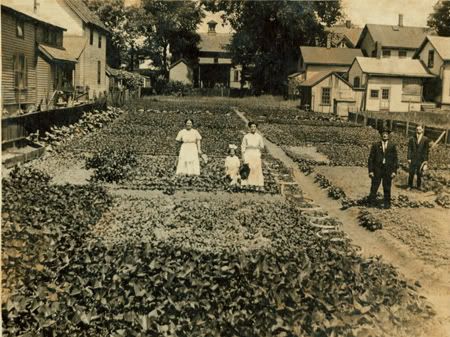
[image from revivevictorygarden.org.]


The famous Obama vegetable garden, ( I couldn't believe this was wikified,-- god bless Wikipedia!) would like to claim some credit as the agitator of the recent bloom of unique-space vegetable gardens, but I think it's just as likely the souring economy as anything--so come to think of it, I guess that means Bush gets the credit.

Anyway, regardless of why, it's clear that when people have more free time and less money, gardening, especially in urban environments, makes sense.

As for the Baltimore veggie gardens, from a purely economic viewpoint, using public space to grow food for impoverished people (as will be done with the Baltimore crop) is most likely inefficient.

Paying city workers to tend small, mixed plots can never be as cost effective as, for instance, buying vegetables wholesale for distribution at food banks. But while this would be cheaper, it would probably be neither encouraging sustainable or organic agriculture, nor a departure from the generic 'script' for using city space and money.

Mayor Sheila Dixon hopes that the Baltimore vegetable gardens will
"show that...an urban environment...can still maintain healthy eating."
--which is important, yes--but I think whats most notable about the project is that it shows dramatically how urban space can be put to innovative uses.

Courtyards, empty lots, parking decks could offer the city more than bland expanses of eyesore. They could offer engagement-- and purpose.

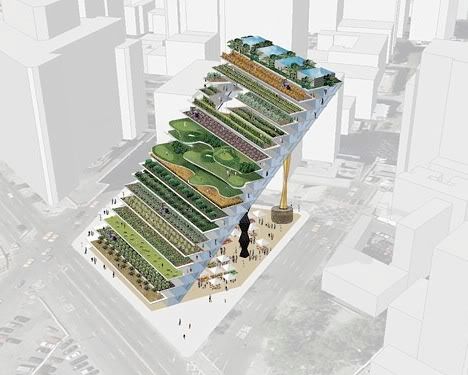
vertical   farm
[A variation on the urban vertical farm, a "farmscraper" (image from treehugger.com.)
]


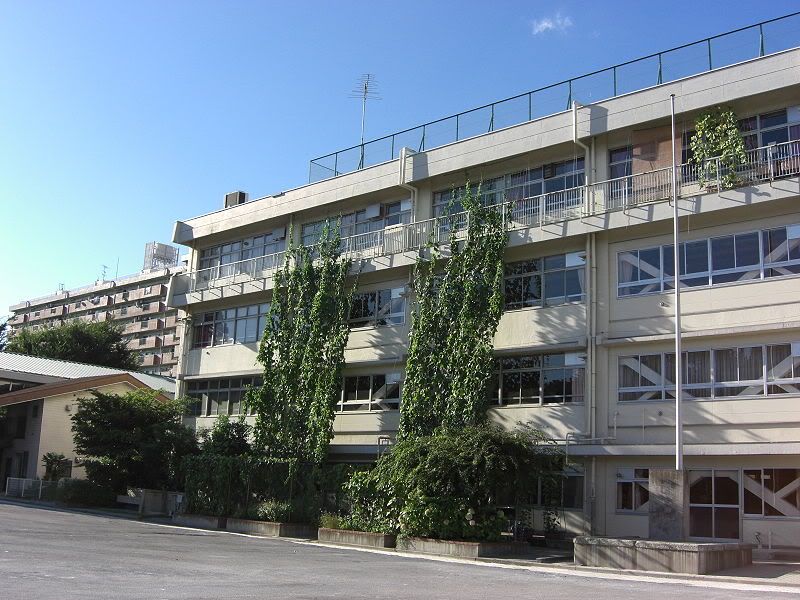
Community gardens, allotment gardens (both of which can be found in Baltimore), green roofs, green walls and even extreme implementations like guerrilla gardens (is that what these are called?) and farmscrapers are all transformative uses for urban space which make environments aesthetically pleasing (by including growing life), useful, edible and engaging--in short, livable.


[A green wall made of melon plants at the Itabashi Primary school in Tokyo. (from Wikipedia)]


In the past month I've noticed two of the tiny lawns on my block have been torn out and replaced with small vegetable gardens, and I think it's a good sign.

Small private patches, community projects and municipal projects all engage the city in different ways, on different scales, but they make the city a more interesting place to be.


-G